



The labor camps at Vorkuta were established in 1931 to mine coal deposits at the foot of the Arctic Ural Mountains, 150 kilometers above the Arctic Circle. For 25 years, prisoners and exiles labored to turn this area of tundra into one of the largest coal sources of the Soviet Union. The complex grew to include more than 20 mines, mining villages, power stations, roads, railroads, and the new city of Vorkuta. Today, Vorkuta is an industrial city in decline, plagued by corruption and poverty. These photos show Vorkuta at the height of the Gulag era -- and as it appears now. (17 PHOTOS)
Vorkuta: From Labor Camps To Industrial Decline

1
The camps at Vorkuta were established in 1931 to mine coal in the Ural Mountains in the Arctic. They continued to operate until 1956.

2
An undated photograph shows two Vorkuta prisoners upon their release. The prisoner on the right was a member of the Polish Home Army, partisans who fought against the Germans during World War II. Many Home Army fighters ended up in the Gulag system after the war.
3
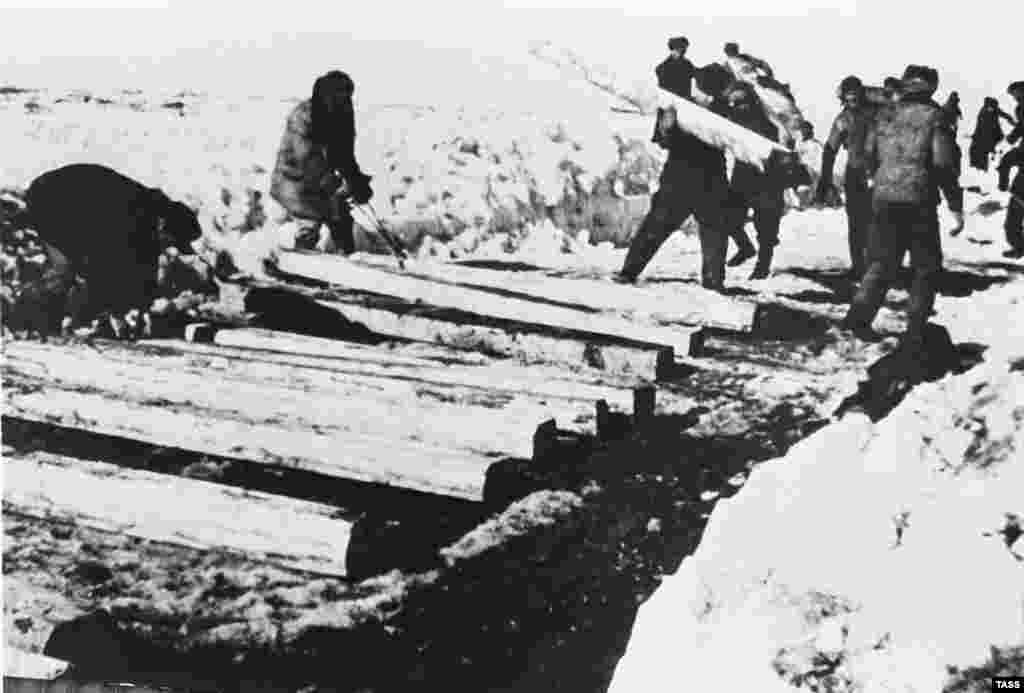
Soviet Gulag prisoners constructing the North Pechora Railway (undated photo).

4
An undated photograph shows Vorkuta camp guards. Guards were most often recruited on three-year contracts after completing their basic military service. Regulations allowed guards to shoot without warning any prisoner who strayed outside the designated work zone or too near a camp fence.