



The labor camps at Vorkuta were established in 1931 to mine coal deposits at the foot of the Arctic Ural Mountains, 150 kilometers above the Arctic Circle. For 25 years, prisoners and exiles labored to turn this area of tundra into one of the largest coal sources of the Soviet Union. The complex grew to include more than 20 mines, mining villages, power stations, roads, railroads, and the new city of Vorkuta. Today, Vorkuta is an industrial city in decline, plagued by corruption and poverty. These photos show Vorkuta at the height of the Gulag era -- and as it appears now. (17 PHOTOS)
Vorkuta: From Labor Camps To Industrial Decline

13
The first monument in Vorkuta to victims of political repression

14
A mural celebrates the 50th anniversary of the 1917 October Revolution.
15
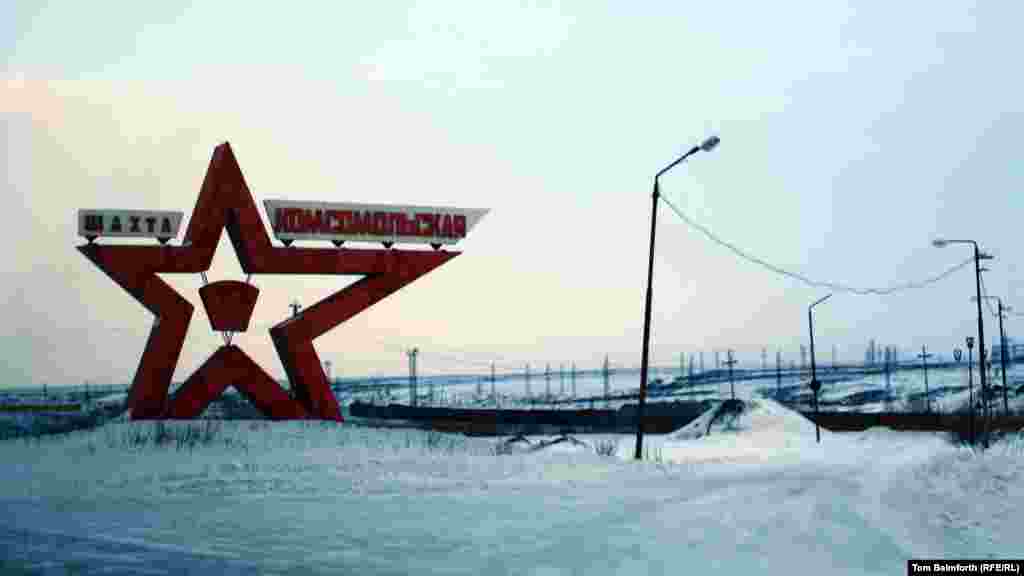
The entrance to the Komsomolskaya mine, which was closed in the 1990s.

16
A Soviet-era mural celebrates the friendship of Russia's Komi Republic, where Vorkuta is located, and Bulgaria.